
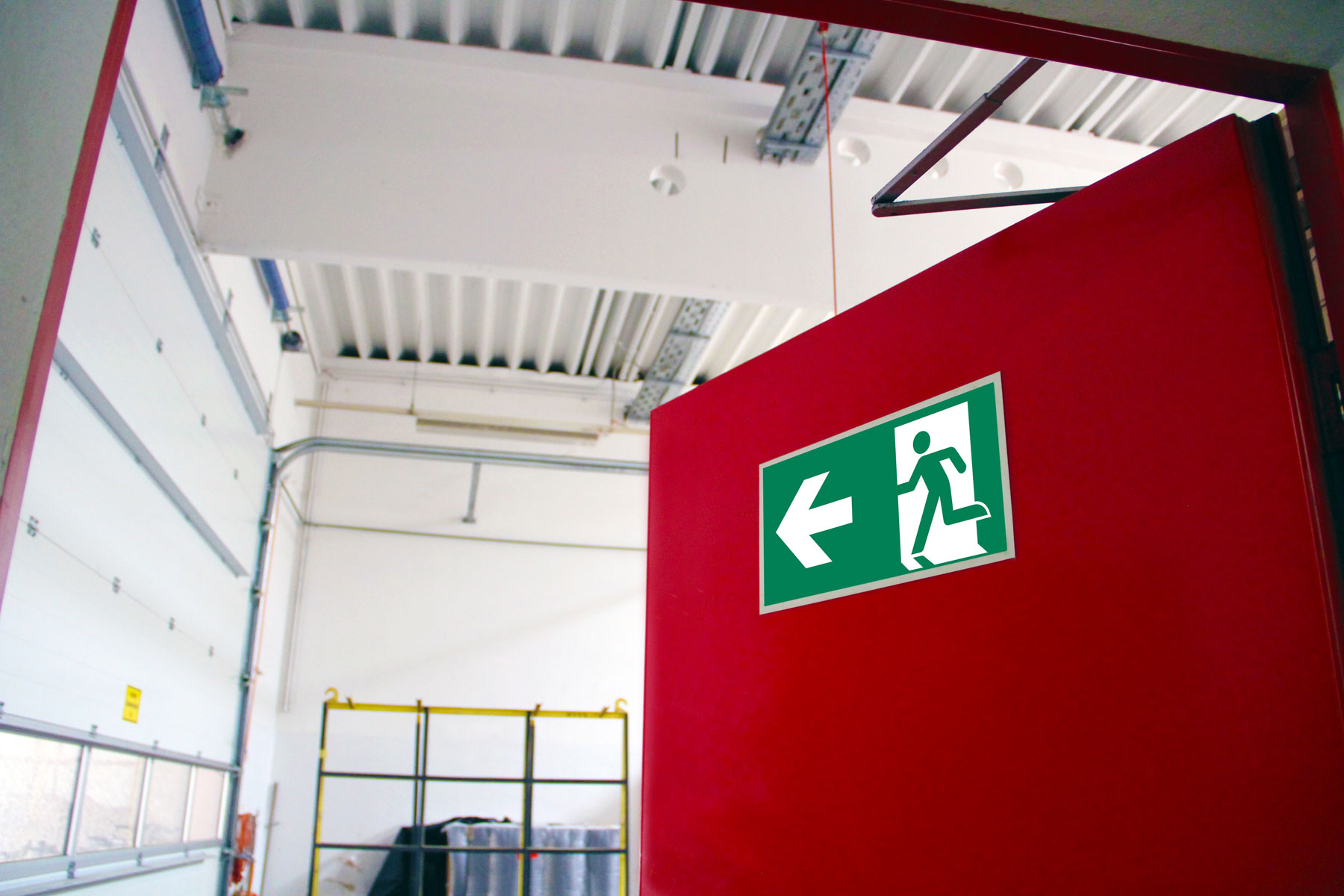
It is impossible to exclude every risk in life but certainly possible to minimise risks in a working environment by ensuring that proper signs are fitted in accordance with the requisite standards.
Danger signs, information signs and caution signs must be provided wherever individuals need to be warned of dangerous situations, or their attention drawn to important information. Statutory requirements and standards define which signs need to be attached at which locations.
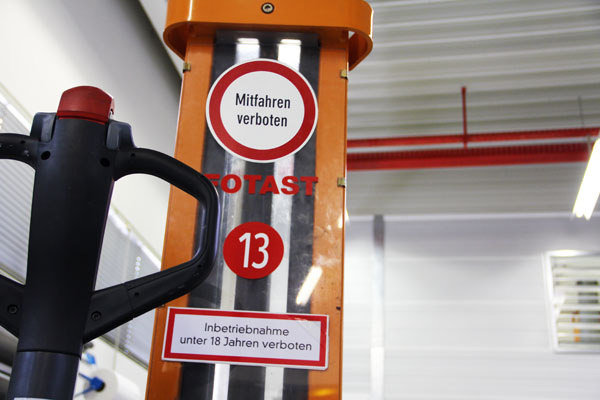

Forster has a large range of danger signs, information signs and caution signs:
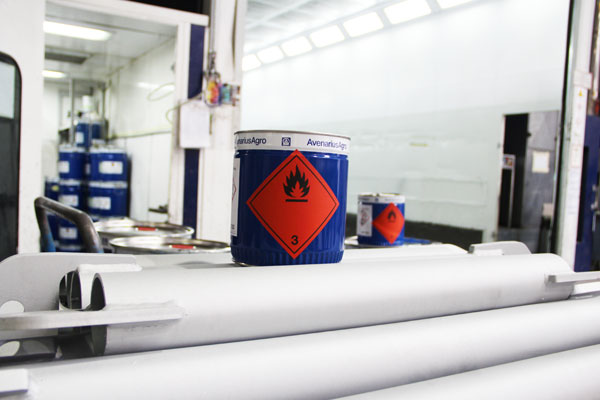
Here you'll find the questions our customers ask most often.
Warning signs and other safety signs are necessary wherever hazards cannot be fully prevented and their proper identification is obligatory. Such an obligation is stipulated in the requisite occupational health and safety regulations and in official rulings. The areas required for marking depend, i.a., on the applicable regulations and hazards to which the workplace is exposed.
Health and safety marking in Austrian business premises is chiefly regulated by the Labelling Ordinance (KennV). In addition, Austrian Standard ÖNORM EN ISO 7010, the internationally recognised standard for safety colours and safety signs, applies.
In its safety signs, Forster fully applies these regulations, offering its signs and markings exactly in line with the applicable requirements and standards.
For more information see the web site of the Austrian Federal Ministry of Labour, Social Affairs, Health, Care and Consumer Protection, Department of Labour Law and Central Labour Inspectorate.
The Labelling Ordinance (KennV) is an Austrian statutory provision that regulates the design and appearance of mandatory health and safety markings. For information on the ordinance see here.
The Austrian Standard ÖNORM EN ISO 7010 is a European standard that defines health and safety signs and pictograms on a general European level.
Signs pursuant to Austrian Standard ÖNORM EN ISO 7010 are permitted in Austria. According to Para 2 of Section 3 KennV, minor deviations from the depictions of Annex 1 to KennV are permissible provided that this does not change or impair the meaning or understanding of the information.
Existing signs and pictograms which conform to the annex of KennV may continue to be used. It is not necessary to replace them by signs in accordance with Austrian Standard ÖNORM EN ISO 7010.
We recommend safety signs in line with Austrian Standard ÖNORM EN ISO 7010.
They offer a number of advantages, especially:
Forster offers the requisite safety signs under Austrian Standard ÖNORM EN ISO 7010 in a range of designs and materials.
Existing signs and pictograms according to KennV can still be used and need not be replaced by signs pursuant to Austrian Standard ÖNORM EN ISO 7010.
Long-time persistent safety signs and guidance signs are useful and, possibly, required where escape routes, emergency exits and safety facilities need to be lit even when the general lighting system has failed.
At workplaces, emergency lighting may be necessary wherever escape routes and work rooms have no (adequate) natural light. Under certain circumstances, self-lighting or persistent lights may be used instead of safety lights. However, this does not apply to areas where light failure constitutes a special hazard.
The design actually required depends on the specific structure, use and government regulations.
Wir sind Partner der Bundesbeschaffung: